Family activities

How to plan a coloring afternoon at home

A coloring afternoon at home does not need a lot of preparation. A few well-chosen pages, basic materials close by, and a comfortable little space are often enough to start without stress.

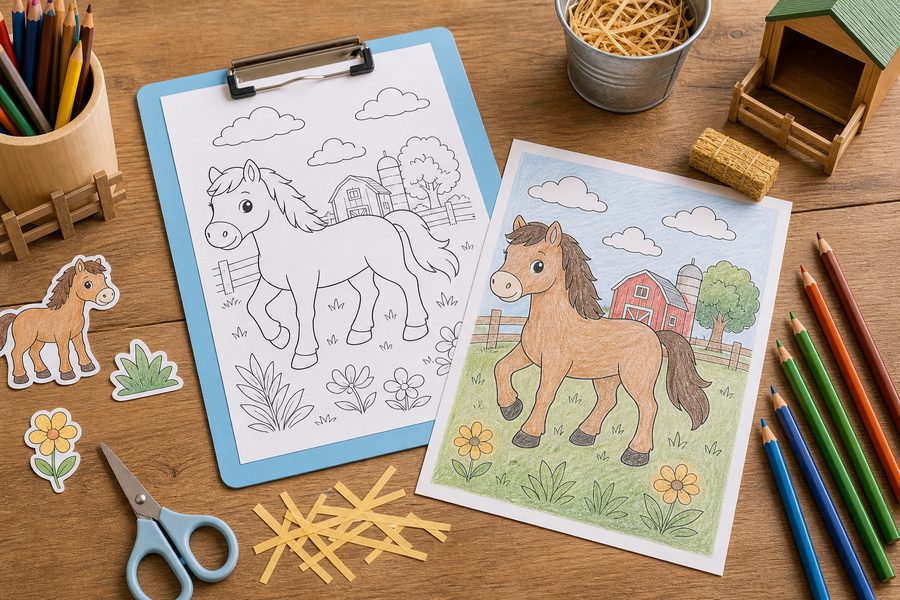
Home table prepared with coloring pages, crayons, pencils, and paper folders
A coloring afternoon works best with a small set of clear options, visible materials, and a comfortable table.

Planning a coloring afternoon at home does not require elaborate preparation. It is usually enough to choose a few pages, put the materials within reach, and create a small space where the activity can begin without hurry.

Prepare the space

Choose a comfortable, uncluttered table. Place the coloring sheets on one side and keep the materials in small containers: crayons, colored pencils, markers, or whatever you have available. If several children are coloring together, separating the materials a little can reduce unnecessary waiting.

You do not need to cover the table with options. In many cases, a small group of carefully chosen pages works better than a large pile of unsorted sheets. That makes the activity begin with more clarity.

Choose a simple theme for the afternoon

You can organize the afternoon around an easy theme such as animals, flowers, fantasy, or pets. The sections for animal coloring pages, dogs, and cats are useful if you want familiar drawings that children recognize quickly.

Another option is to combine one easy sheet with another that has a little more detail. That allows each child to choose according to their mood, attention span, and available time.

Add a simple structure

A coloring afternoon can have a little structure without becoming complicated. For example, you can invite everyone to choose three main colors, color a different type of page each, or create a tiny exhibition at the end.

You can also keep finished pages in a folder. Looking at the drawings together helps children value the process and leaves you with material that can later decorate a bedroom, a notebook, or a creative corner.

Alternate between paper and screen

If you do not want to print too many sheets, start by testing pages in the online coloring tool. Later, you can print only the ones that children enjoy most or the pages they want to finish on paper.

This combination helps save paper and gives children a chance to test colors before using crayons or markers.

Small ideas that make the activity feel more special

A coloring afternoon can feel more thoughtful through small gestures: a tray of materials, a folder for finished pages, or a little space on the table where the drawings can be shown at the end. It does not need to become a big event. It only needs to feel easy and welcoming.

  • Animal afternoon: dogs, cats, horses, or farm animals.
  • Nature afternoon: flowers, trees, and simple landscapes.
  • Fantasy afternoon: imaginative characters and free color choices.
  • Mixed afternoon: one easy page, one animal page, and one flower page.

Practical summary

To plan a coloring afternoon at home, prepare a simple table, choose only a few pages, keep the materials ordered, and leave enough room for each child to choose comfortably. The activity can stay short or grow longer depending on the family's rhythm.

Frequently asked questions

FAQ about planning a coloring afternoon at home

How many drawings should I prepare for a coloring afternoon?

Three or four pages per child are usually enough. A small number of clear options works better than too many unsorted sheets.

Which materials are most practical?

Crayons and colored pencils are usually enough. Markers can also work if the paper handles ink well.

How can I keep finished drawings?

You can use a folder, a box, or a temporary display corner to keep the favorite pages.

Questions readers often ask

Questions readers often ask

Yes. Start with a simple page for younger children, then invite older children to add a background, a short story or more detailed colour choices.

Can this idea work for different ages?

Yes. Start with a simple page for younger children, then invite older children to add a background, a short story or more detailed colour choices.

Which materials are most practical?

Coloured pencils, crayons and washable markers are all good options. Keep the materials simple so children can focus on the activity rather than preparation.

Can I use this activity in a classroom?

Yes. It works for individual work, small groups, early finishers and display projects. A shared theme can also help connect several finished drawings.

How long should a colouring activity last?

A short ten-minute session is useful for a calm break, while a longer session can include printing, storytelling and displaying the final work. Follow the child’s interest.

What can we do with finished pages?

Keep them in a creative folder, make a classroom mural, give them as a small gift or use them as the start of a homemade storybook.