
Printable coloring pages: how to choose pages that really work. This guide helps families, teachers and children use Printable coloring pages: how to choose pages that really work as a clear, relaxed activity with simple materials and a purpose that is easy to adapt.
Choose a page that works well
Start with Printable coloring pages: how to choose pages that really work when the page has clear outlines, recognisable elements and enough open space for the child to make choices without feeling rushed.
A calm activity does not need many rules. One page, a short invitation and a little time to look at the image are usually enough to begin well.
Turn the picture into an activity
Try a small colour palette, begin with the larger areas or ask one short question before starting. These choices give the activity direction without making it rigid.
At home, this can be a quiet shared moment. In the classroom, it can support a topic, a transition or a short independent task.
Prepare comfortable materials
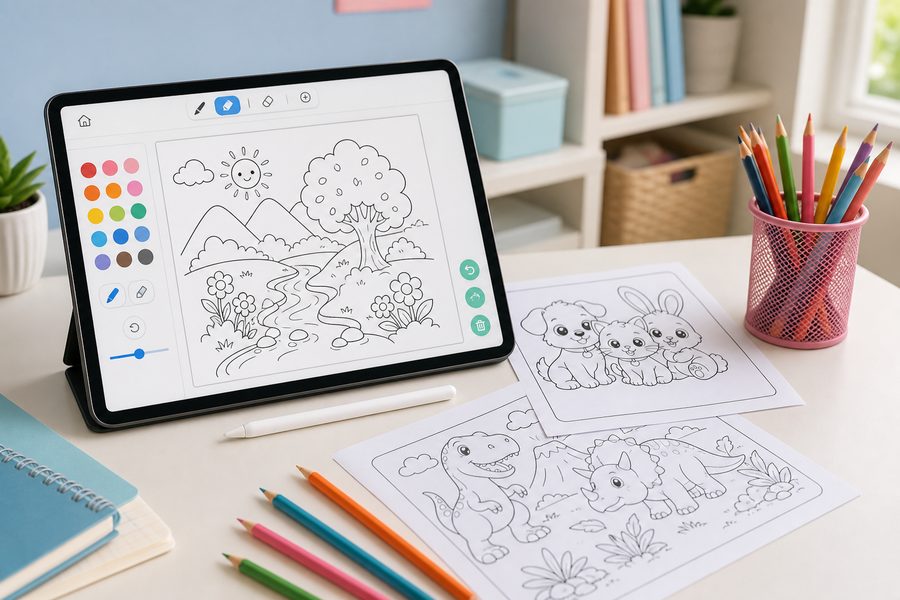
Coloured pencils and crayons are enough for most pages. Markers can be saved for details, and white-background printouts keep outlines easy to read.
The online colouring tool is useful for trying colours before printing or when a paper activity is not the best option.
Connect the idea with other themes
Combining related collections keeps the experience fresh: animals, nature, fantasy and seasonal ideas can all begin with the same calm routine.
Choose the amount of detail according to the available time. A simple page can be finished quickly; a richer one can become a longer creative conversation.
A simple way to finish
The aim is not to complete as many pages as possible. It is to offer a pleasant visual moment in which children can observe, choose and create at their own pace.
Save the finished page, display it, or use it as the starting point for a small story, a new word or a conversation about the theme.
Offer two or three colours first, then invite the child to choose one extra colour independently.
UNESCO: UNESCO’s practical guidance on arts education supports accessible creative experiences that can be adapted to different learning contexts.